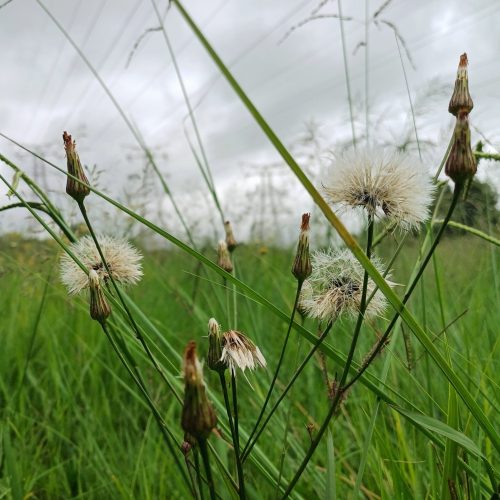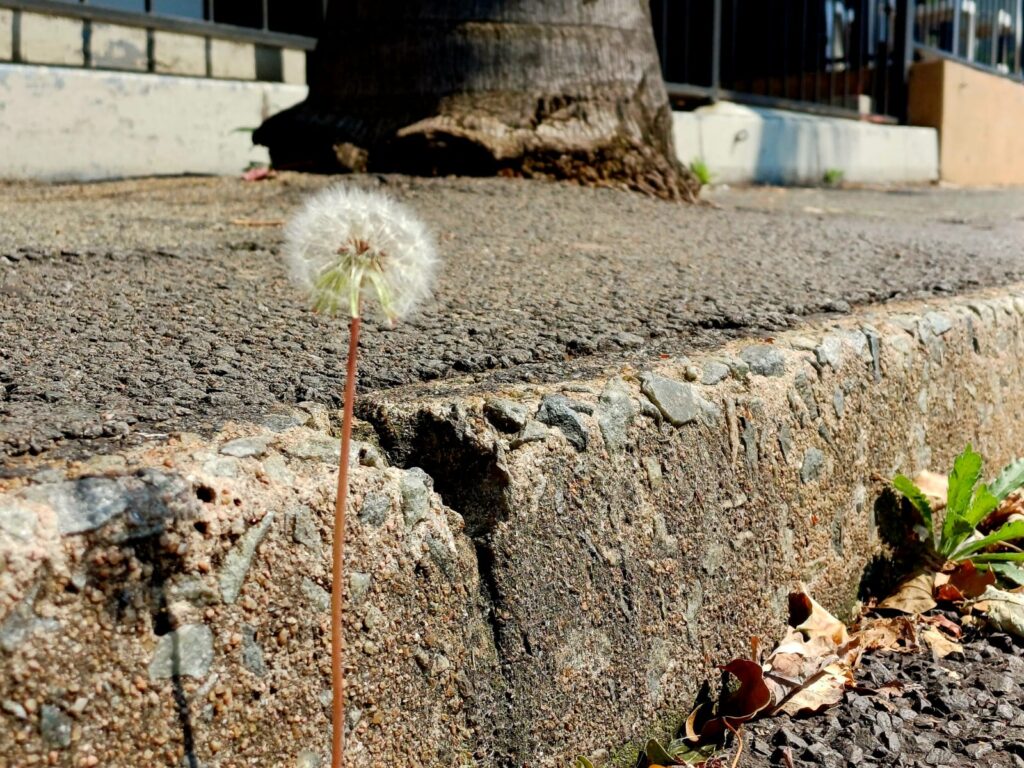
“And the dandelion does not stop growing because it is told it is a weed.
The dandelion does not care what others see. It says, “One day they will be making wishes upon me!”
– B. Atkinson
In many Western cultures, the “perfect garden” is one defined by uniformity. Think smoothly mown lawns and sharply trimmed hedges nestled behind picket fences. For the gardeners of today, dandelions are among the greatest threats to an unblemished green landscape, with their bright yellow flowers, long stubborn roots, and capacity to spread far and wide against all odds. But the dandelion wasn’t always considered a weed that needed to be eradicated. Not only do dandelions come with a host of ecological benefits as food for pollinators and natural fertilisers, but they have also been used as medicine, food, and even wine throughout the ages. Farmers used to weed grass out of their gardens just to make space for the dandelions!
Dandelions are prolific because of their unique design, which promotes survival and seed dispersal. Their intricately branched root system exhibits fractal patterns that are reflected on different scales in nature, from river systems, lightning strikes, and snowflakes to our own hearts, lungs, and even our brains.
In this way, the dandelion mirrors neurodiversity in both a metaphorical and literal sense. Neurodiversity is at odds with many aspects of modern society, often excluding different ways of learning, thinking, and communicating. Just like dandelions, our view of neurodiversity is largely influenced by the norms and expectations of our modern world. And like dandelions, neurodiverse individuals bring unique perspectives, innovative approaches, and diverse thinking styles to society that can enrich our world and drive progress across many fields. By aiming to embrace, rather than eradicate, neurodiversity, we can cultivate a society that is a more inclusive, more innovative and allows everyone to flourish.
Identity
Let them be as flowers,
always watered, fed, guarded, admired,
But harnessed to a pot of dirt.
I’d rather be a tall, ugly weed,
clinging on cliffs, like an eagle
wind-wavering above high, jagged rocks.
To have broken through the surface of stone,
to live, to feel exposed to the madness
of the vast, eternal sky.
To be swayed by the breezes of an ancient sea,
carrying my soul, my seed,
beyond the mountains of time or into the abyss of bizarre.
I’d rather be unseen, and if
Then shunned by everyone,
than to be a pleasant-smelling flower,
growing in clusters in the fertile valley,
where they’re praised, handled, and plucked
by greedy, human hands.
I’d rather smell of musty, green stench
than of sweet, fragrant lilac.
If I could stand alone, strong and free,
I’d rather be a tall, ugly weed.
– Julio Noboa Polanco